A new epoch for software
AI represents a pivotal shift in the very foundations of software. It is transforming how products are conceived, built, priced, and adopted – dismantling long-held norms around development, delivery, and go-to-market strategy.
Where the internet connected the world and the cloud made software always-on, AI makes it always-acting. We are moving from tools that assist work to intelligent systems that do the work – autonomously, adaptively, and at scale.
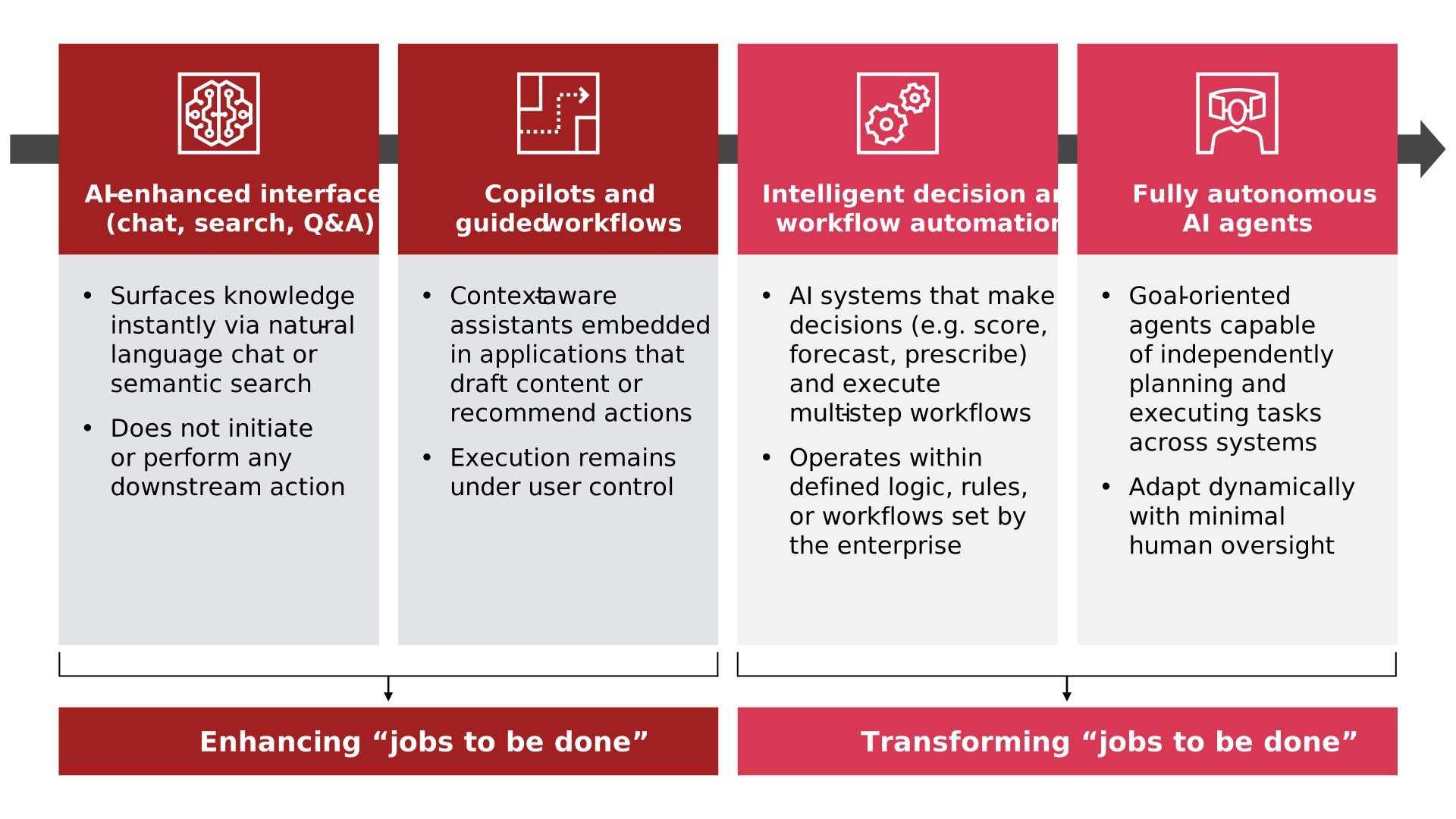
EXHIBIT 1: Spectrum of AI applications in the software ecosystem
This marks a major disruption and one of the greatest opportunities for software vendors, affecting everything from business models and cost structures to talent requirements and shareholder expectations. Software vendors therefore need to reshape their strategic playbooks to seize this generational opportunity.
We outline seven themes that challenge conventional software playbooks and demand a fresh lens on where and how value will be created in the years ahead.
Rewriting the software playbook
1. From workflow to work: Software’s new gold rush into a $50tn market
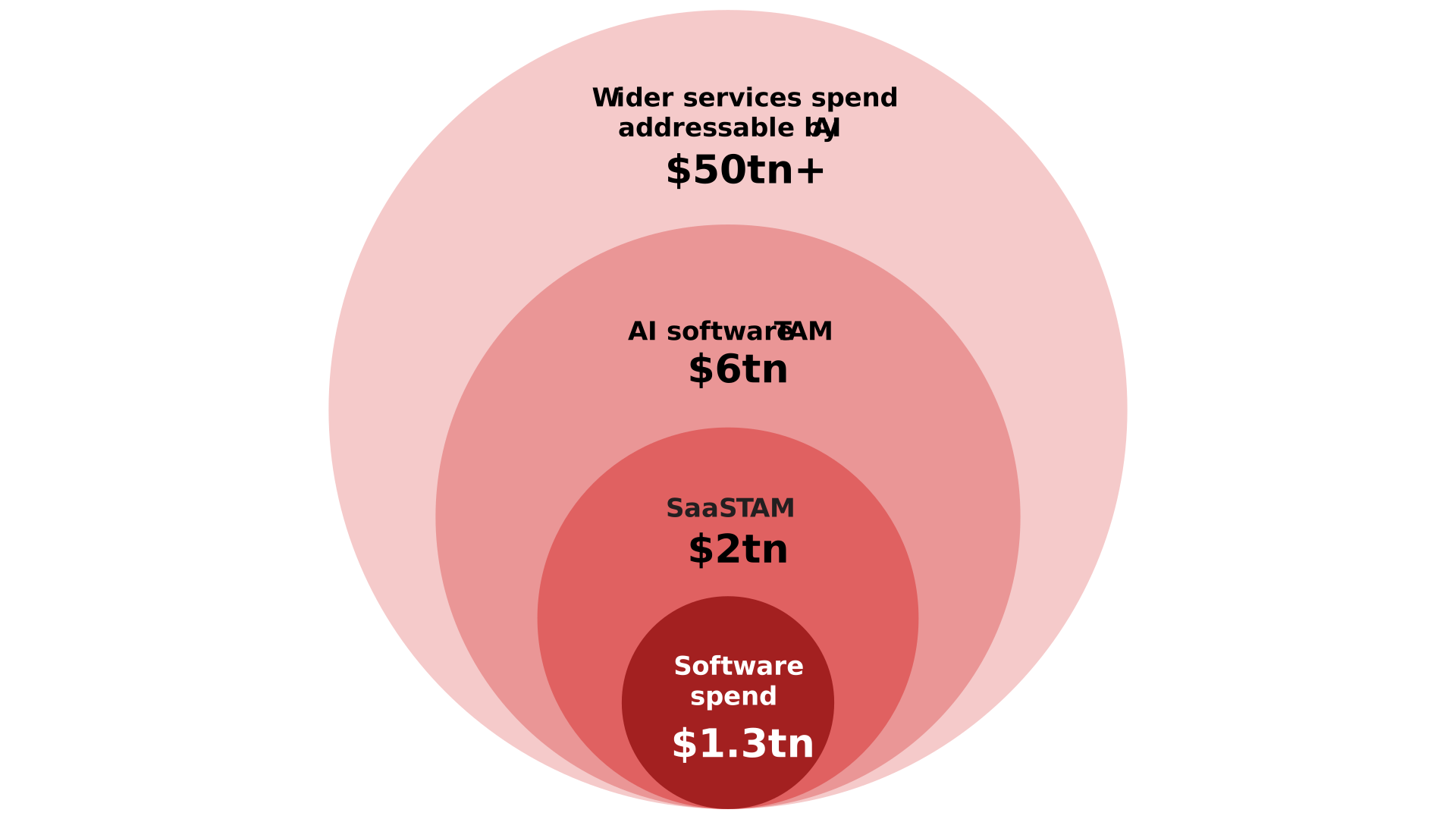
Enterprise software focused on managing records and automating task workflows is currently a $1.3tn market. AI expands this frontier by augmenting or automating cognitive tasks, enabling software to tap into the $50tn+ global labour market.
AI-driven “digital workers” (or agents) can perform tasks across functions (legal, accounting, support, sales, and research) – turning what were once service or labour costs into software revenue. This is not just a productivity uplift; it is software displacing services. In many categories, we anticipate 2-3x or more of TAM expansion, as software penetrates areas historically reliant on human expertise.
The TAM for software is no longer defined by IT budgets, but by the value of the activities that can be augmented or automated.
EXHIBIT 2: Software market opportunity expansion from AI
2. Shifting moats: How AI-native “systems of action” are redefining the foundations of enterprise software
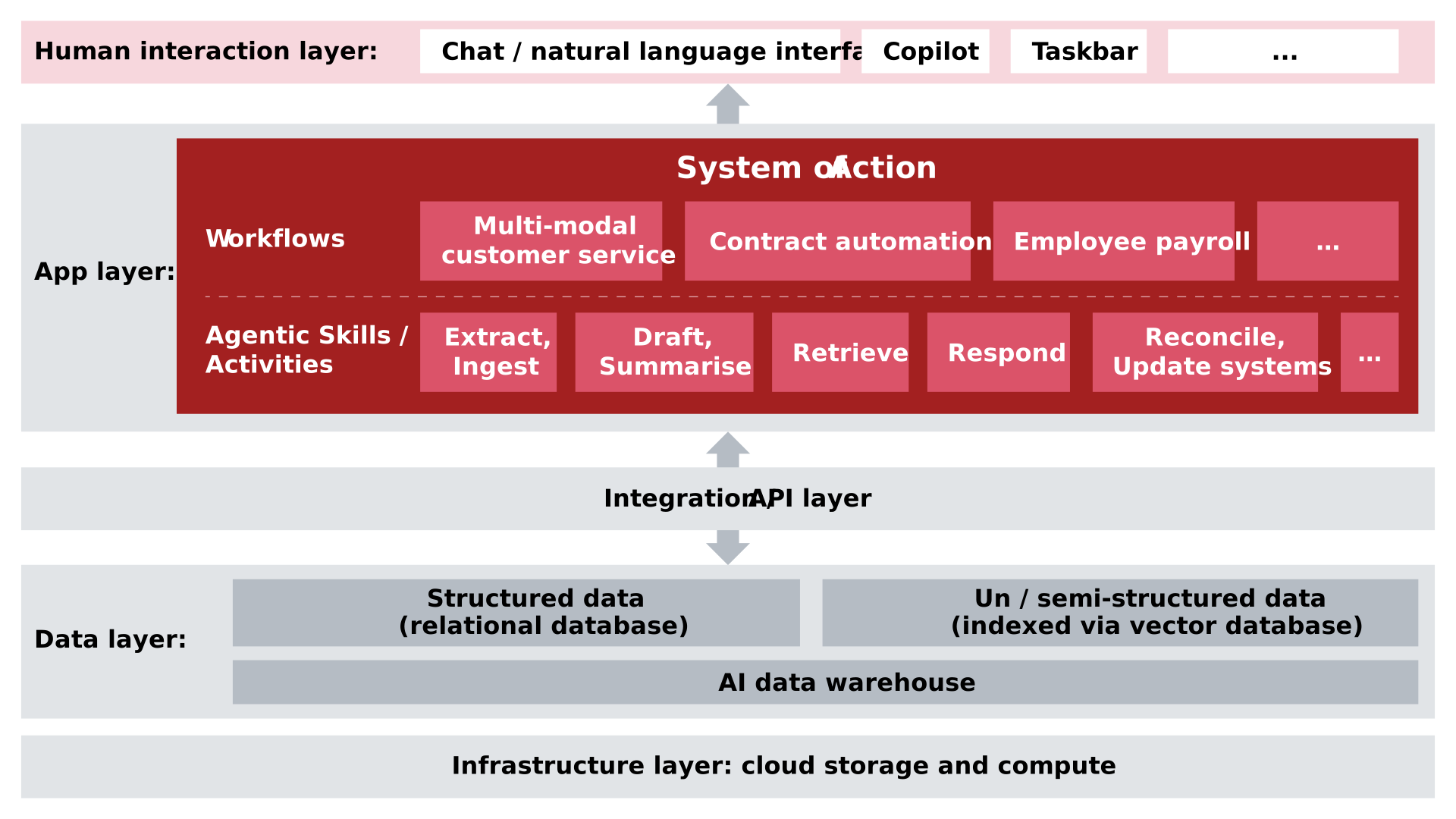
For decades, enterprise software has been anchored in enterprise data and workflow systems – spanning “systems of record” (e.g. ERP, CRM, HCM) and workflow-centric solutions that manage critical data and domain workflows. AI shifts the frontier to “systems of action” – software that integrates data and acts intelligently on the user’s behalf.
Enterprise data and workflow systems derive their strength from years of accumulated business practice, sector-specific workflows, and domain-informed decision logic. This embedded operating knowledge is especially critical in mission-critical environments where precision and operational continuity are paramount. In certain specialised domains, longitudinal and outcome-linked datasets (e.g. historical clinical imagery or labelled underwriting outcomes) can further strengthen AI performance through selective fine-tuning or retrieval.
Adoption barriers for AI-native “systems of action” are relatively low. These solutions deliver strong ROI by automating processes and generating results – for example, forecasting cash flow in ERP or surfacing top deals in CRM. Additionally, AI can migrate data schemas, and ingest historical data, making it faster and easier to transition between applications.
EXHIBIT 3: Illustrative evolution of end users’ tech stacks with the advent of “systems of action”
AI-native solutions are beginning to penetrate through a beachhead strategy: a focused, high-impact proposition that complements existing software. Examples include a voice agent handling after-hours calls linked to a CRM, or an AI tool automating contract review within a document management or case management system. By offering immediate value and tapping into non-IT budgets, they sidestep IT whilst gaining rapid traction.
As the beachhead gains data and trust – by capturing domain-specific signals like call recordings or unstructured documents – it enables better model tuning and outcomes. With better performance, the AI-native solution can then expand into adjacent tasks – e.g. from ticket triage to full case management, or invoice coding to autonomous accounts payable. This focused entry allows vendors to build user trust, accumulate proprietary data, and refine models, eventually evolving into full-featured platforms that scale and unlock a much larger TAM.
As agentic capabilities accelerate, a diverse set of software provider archetypes is emerging, each pursuing different routes to meeting enterprise requirements.
EXHIBIT 4: Emerging provider archetypes in agentic enterprise software
| Archetype | Description |
|---|---|
| Functional agentic platforms with deep-domain workflows | Domain-focused (vertical / process-specific) platforms offering agentic workflow capabilities tailored to industry processes |
| Horizontal agent platforms | General-purpose agent platforms that can be applied across multiple functions and use cases |
| Workflow automation vendors | Workflow-centric providers that help organisations run business processes, now incorporating AI agents to automate more steps within those workflows |
| Foundation models | LLM-native agentic systems that can plan and execute tasks with minimal setup and adapt quickly to different contexts |
| Systems of Record (SoR) with agentic extensions | SoRs (e.g. ERP, CRM, HCM) with built-in agentic capabilities to automate tasks within the domain workflows they manage |
| Hyperscale cloud platforms | Cloud providers offering the underlying AI models and developer tools to build agentic applications |
This wide playing field presents an exciting opportunity for software vendors to shape the next generation of enterprise applications. Vendors that can integrate the full stack – from human interaction to workflow logic and agentic execution – will be best positioned to deliver superior customer outcomes and distinctive user experiences.
3. Beyond Software-as-a-Service: The rise of Software-as-a-Solution and value-oriented monetisation
As software increasingly handles end-to-end tasks, the boundary between product and service is fading. Enterprise vendors are shifting from pure SaaS to “software-as-a-solution” – delivering outcomes, not just tools. For example, an accounting platform might evolve to offer automated bookkeeping directly to small businesses, payroll tools may offer full-service payroll, CRM and marketing suites could move from tracking leads to delivering them through AI-powered demand generation, and helpdesk platforms could evolve into AI-managed support services that resolve common issues automatically and escalate only the exceptions.
To stay relevant, vendors must move beyond subscriptions and deliver vertically integrated propositions that fuse software with AI to capture the value in delivering services. The reward? Higher revenue per customer and access to non-IT budgets, such as operations or outsourcing.
Concurrently, AI is reshaping software monetisation. SaaS thrived on seat-based subscriptions, delivering predictable revenue and c.80%+ gross margins. AI introduces new cost structures driven by GPUs, compute, and inference workloads. As these technologies scale, unit costs should decline (“LLMflation”) through model and hardware efficiencies, as well as on-device inference. In parallel, pricing models are adapting to reflect value delivered and intensity of use. Customers are resisting fixed fees for unproven AI, driving a shift towards more variable and value-based monetisation, increasingly resembling tech-enabled services. This shift is unfolding in two ways:
- Enhancing “jobs to be done”: AI-powered features such as copilots, chatbots, and intelligent search are being upsold through add-ons, renewal-based price increases, tiered pricing structures, or usage-based pricing (e.g. charging per API call or generated output).
- Transforming “jobs to be done”: Agentic AI enables outcome-based pricing, which marks a shift from user / seat-based pricing. Outcome-based pricing entails charging per unit of value delivered (e.g. meetings booked by an AI sales assistant, tickets resolved by a support bot). Though harder to implement, these models better align vendor revenue with customer success, and may become the norm in AI-native categories. Moreover, value-based pricing captures gains in outcome quality – for example, AI-based contract lifecycle management tools that surface insights previously inaccessible. As AI elevates output standards, pricing will increasingly reflect the value delivered.
4. Agile and experimental go-to-market: Blending product-led scale with tech-enabled enterprise transformation
Just as AI is reshaping software monetisation, it is also transforming how it is sold – creating new go-to-market dynamics. Unlike early SaaS, where vendors had to evangelise the cloud, enterprise buyers today are actively seeking AI solutions. This "pull" dynamic leads to faster sales cycles, often initiated by inbound interest. Yet whilst adoption is rising quickly, true transformation in enterprise software requires process redesign, data governance, and new go-to-market models that blend speed with structure.
AI adoption is unfolding along two distinct paths, each requiring a different commercial approach. The most effective vendors blend both motions – combining self-serve pathways that capture bottom-up demand with structured enterprise engagements that deliver transformational impact.
- Enhancing “jobs to be done”: When AI delivers clear, individual utility (e.g. copilots for search, summarisation, or analytics) adoption is rapid and organic. These solutions suit product-led growth motions: seamless onboarding, in-product guidance, and team-level expansion that can later scale across the enterprise.
- Transforming “jobs to be done”: AI that reshapes core operations (e.g. claims management, payroll, or service resolution) demands a sales-led, change-driven approach. Success depends on data readiness, compliance alignment, and operating-model redesign. Adoption typically follows a staged path: limited pilots, controlled rollouts with clear quality gates, and full deployment once outcomes like accuracy, cycle time, or cost-to-serve are validated. This is also where forward-deployed engineers and sales engineers become critical – working directly with customer teams to operationalise AI-driven workflows. Their proximity to live environments accelerates value realisation, derisks AI rollouts, and builds the trust needed for enterprise-wide transformation.
AI is driving a step-change in go-to-market execution – compressing timelines, sharpening precision, and freeing teams to focus on higher-value activities across the go-to-market lifecycle.
EXHIBIT 5: Application of AI throughout the go-to-market lifecycle
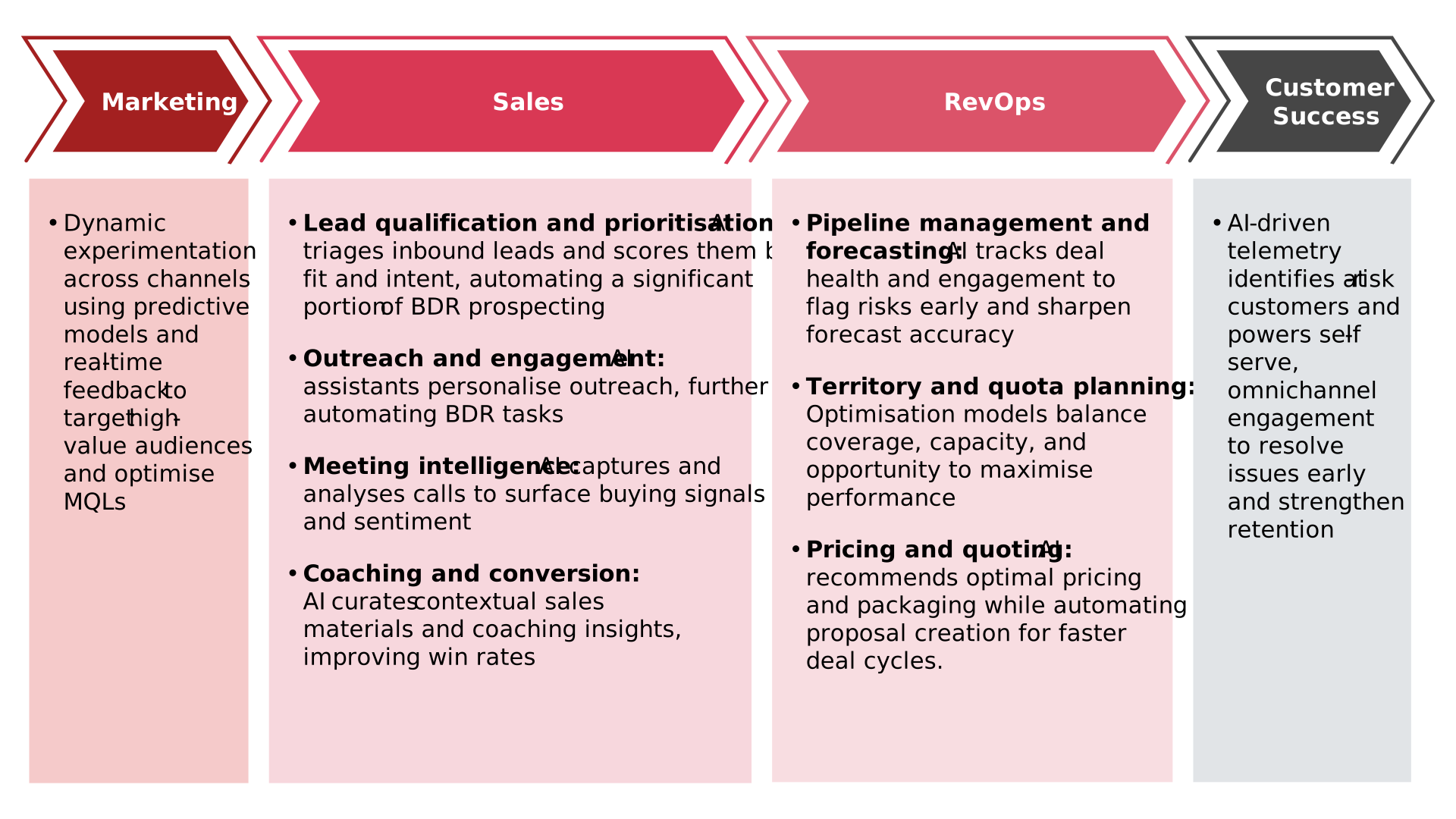
Vendors will need to balance fast, product-led adoption along with process transformation that demands strong data foundations, governance, and change management. Further, success depends on applying technology throughout the sales lifecycle – using AI to automate qualification, personalise engagement, refine forecasting, and improve retention. Those that integrate these motions effectively, and combine automation with human oversight, will redefine go-to-market advantage – building commercial systems that learn faster, scale smarter, and convert demand into durable growth.
5. Product and engineering velocity in the AI age: The new battleground for competitive advantage
AI is also reshaping the constraints of software development. Scarce engineering talent and long build cycles are being eroded by AI coding assistants and generative tools that significantly boost developer productivity. The barrier to shipping features is lower than ever, shifting product development from a supply-led mindset to a demand-led one – prioritising customer needs over feasibility constraints. There are four key implications for product and engineering teams in software businesses:
- Redefinition of product management: Product Managers (PMs) translate user needs into specs over many sprints. With AI-assisted development, the bottleneck shifts to identifying the right problems and designing effective user experiences, where domain expertise becomes critical – e.g. understanding accounting workflows to guide AI in building AI-bookkeeping tools. Teams may evolve to include more domain specialists (e.g. doctors, lawyers, ops leads) collaborating with AI-savvy developers in small, multidisciplinary “pods”, replacing the classic pyramid model with flatter structures. As the cost of building and iterating declines, so does the cost of failure – enabling teams to experiment more freely, test new ideas in market, and quickly redirect effort toward what proves most valuable.
- Evolution of technical architecture: Winning stacks resemble LEGO kits, with components connected via open standards and natural language interfaces. Protocols such as the Model Context Protocol (MCP) enable agents to securely access data and collaborate, making it easy to switch between models, tools, or cloud platforms. The new engineering playbook combines continuous learning, rapid experimentation using versioned prompts, hybrid retrieval across vector and structured data, and fast reassembly through standardised endpoints, turning user intent into accelerating product velocity.
- Acceleration of modernisation: AI-assisted code refactoring is accelerating system modernisation (e.g. COBOL to Java/.NET) by automating code translation, dependency mapping, architectural assessment, and business logic extraction. This reduces reliance on scarce legacy expertise and shortens migration timelines, whilst developers provide oversight to ensure accuracy, manage exceptions, and maintain performance integrity.
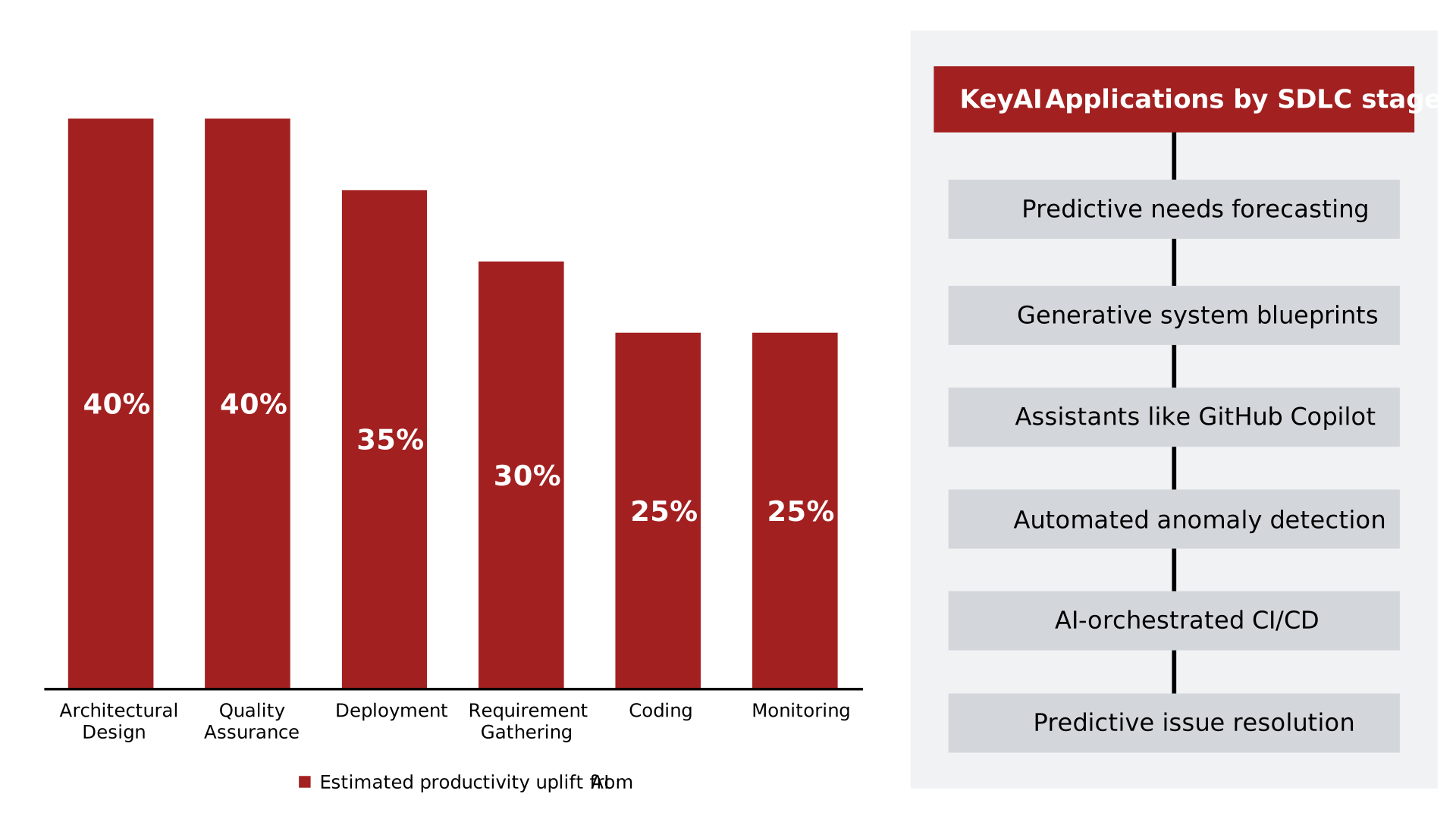
- AI as a catalyst for engineering and R&D excellence across the software lifecycle: AI is permeating every stage of the software lifecycle, lifting R&D output by 25-40%, and code assistants are expected to be used by c.75% of enterprise engineers by 2028. Proprietary code is no longer the moat; advantage comes from adapting quickly, building trust, and applying AI responsibly. Simulation and automation tools are enabling bold experimentation, whilst metrics of success move from efficiency to adaptability, innovation speed, and resilience. Engineers are becoming designers of intelligent systems, and businesses that reconfigure teams, tooling, and measures of success around this shift will lead.
EXHIBIT 6: Integration of AI across the stages of Software Development Lifecycle
Source: PwC estimates
6. Innovation is the new capital: Rethinking R&D investments to unlock AI TAM
For the past decade, many software firms relied on bolt-on M&A – acquiring smaller competitors or adjacent solutions to grow portfolios and customer bases. Whilst M&A will remain an important lever, the AI era demands renewed focus on R&D and innovation.
Bolt-on acquisitions can contribute, but are usually insufficient to make vendors truly “AI-first”, as meaningful impact comes from embedding intelligence across the UI, workflows, analytics, and automation layers. AI-focused M&A also faces structural hurdles: strong startups command high valuations, and key talent – especially R&D engineers who value autonomy and an innovation-centric culture – could churn post-acquisition. As a result, whilst M&A continues to be a value driver for software businesses, we are seeing a shift toward in-house development and strategic partnerships.
AI strengthens the case for this shift by fundamentally changing the economics of building software. AI is structurally compressing the cost of software development: the marginal cost of writing, testing, and maintaining code is falling, enabling software firms to deliver more of their existing roadmap with leaner teams, faster cycles, and higher quality.
The strategic imperative is clear: vendors that continue to invest in innovation are best positioned to lead in this cycle and address the expanding TAM opportunity. In the AI era, innovation is the new capital, and those who embrace it will shape the next generation of enterprise software.
7. Durable growth at premium value: Reframing metrics and valuations for the AI era
The AI-native era requires a new lens on software metrics. Classic benchmarks like gross margins, the Rule of 40, and LTV/CAC remain relevant, but the thresholds are shifting. Winners will be those who embrace this shift and operationalise strategy and execution to drive durable, scalable value creation.
- Growth is paramount: With AI unlocking new TAM and accelerating adoption, SaaS businesses, even in more mature market segments, have a pathway to sustain 25%+ CAGR in ARR over the long term.
- Rule of 40 remains relevant, but recalibrated: The Rule of 40 still holds – but with greater emphasis on growth. In this new paradigm, sustaining long-term growth of 25%+ CAGR is increasingly prioritised over simply maintaining traditional EBITDA margins.
- Acquisition and retention metrics are decisive: High-quality businesses drive accretive performance on GRR, NRR, and LTV to CAC metrics, particularly when AI is embedded deeply in the workflow and outcomes. Strong user-led pull dynamics can drive elevated near-term retention and faster CAC payback. To sustain these advantages over time, continued investment in product innovation is essential.
- Valuations reflect these trade-offs: The market is rewarding AI firms on ARR multiples (median of c.33x vs c.10x for pure SaaS), reflecting confidence in their long-term compounding potential.
Conclusion: software vendors’ AI playbook starts here
To lead in the AI-native era, software vendors must rewire how they think, build, and innovate:
- Cloud is now table stakes: Cloud architecture provides elastic compute, distributed data access, and low-latency deployment to serve models at scale, whilst integrating with AI ecosystems, vector databases, and orchestration frameworks. Beyond scalability, cloud offers strengths in security, observability, and iteration speed, allowing vendors to ship products continuously. As a result, cloud-based software companies hold a structural advantage in innovation, delivery, and long-term competitiveness over on-premise / hosted providers.
- Strengthen domain moats: Vendors with deep domain workflows and embedded process logic have an advantage. In specialised areas, selective use of proprietary, outcome-linked datasets can further strengthen AI performance. The opportunity is to combine domain expertise and high-value data signals to build differentiated agentic capabilities that deliver meaningful customer outcomes.
- Prioritise R&D as a strategic lever: Continued investment in AI talent, tooling, and partnerships is critical as agentic solutions become core to automating the key jobs-to-be-done. Vendors that maintain this focus will be best positioned to unlock a materially larger TAM.
- Accelerate product cycles: The software development process itself is being transformed by AI coding assistants that can produce code, write test cases, and even refactor legacy code, dramatically improving engineering productivity. Agile orgs that embrace these tools can ship at a blistering pace, potentially outmanoeuvring slower rivals.
- Embed domain experts in product teams: Paradoxically, as coding becomes "easier," the real challenge shifts to understanding complex customer problems. In the AI era, software is expanding into entirely novel domains, taking on workflows that were previously too nuanced, judgment-based, and handled by humans. This shift makes deep domain expertise tailored to specific use cases more critical than ever.
- Embrace value-based pricing: Vendors need to shift from user / seat-based pricing and instead link pricing to customer usage or business outcomes (e.g. transactions, time saved or leads generated) to reflect value delivered. This also enables vendors to manage AI’s variable costs (e.g. inference). Outcome-based models require strong telemetry, buyer education, and contractual alignment.
- Rewire GTM: Combine product-led and sales-led motions – enabling users to discover, trial, and adopt AI features organically whilst supporting enterprise-scale transformation through structured, change-driven engagements. Embed AI across the go-to-market engine to accelerate qualification, personalisation, forecasting, and retention. Expand reach through ecosystems, marketplaces, and integrations, and pursue deeper domain alignment to own business workflows and outpace competitors.
- Institutionalise responsible AI: Embed trust as a first-class product feature. Ensure AI-driven decisions are explainable, auditable, and free of systemic bias. Treat responsible AI as a strategic differentiator that earns customer confidence, as buyers grow more discerning.
What’s next?
Each of these dimensions – product, engineering, pricing, and go-to-market – warrants a deeper exploration. In upcoming publications, we will examine how vendors can retool their operating models to compete and thrive. One thing is certain: the AI-native era is already here, and those who succeed will be willing to rethink their foundations and build anew.
Contact us