CLIENT
Confidential
INDUSTRY
Automotive,
Pharma life sciences
SERVICE
Business model reinvention

Situation
How can continuous health monitoring fit into everyday life?
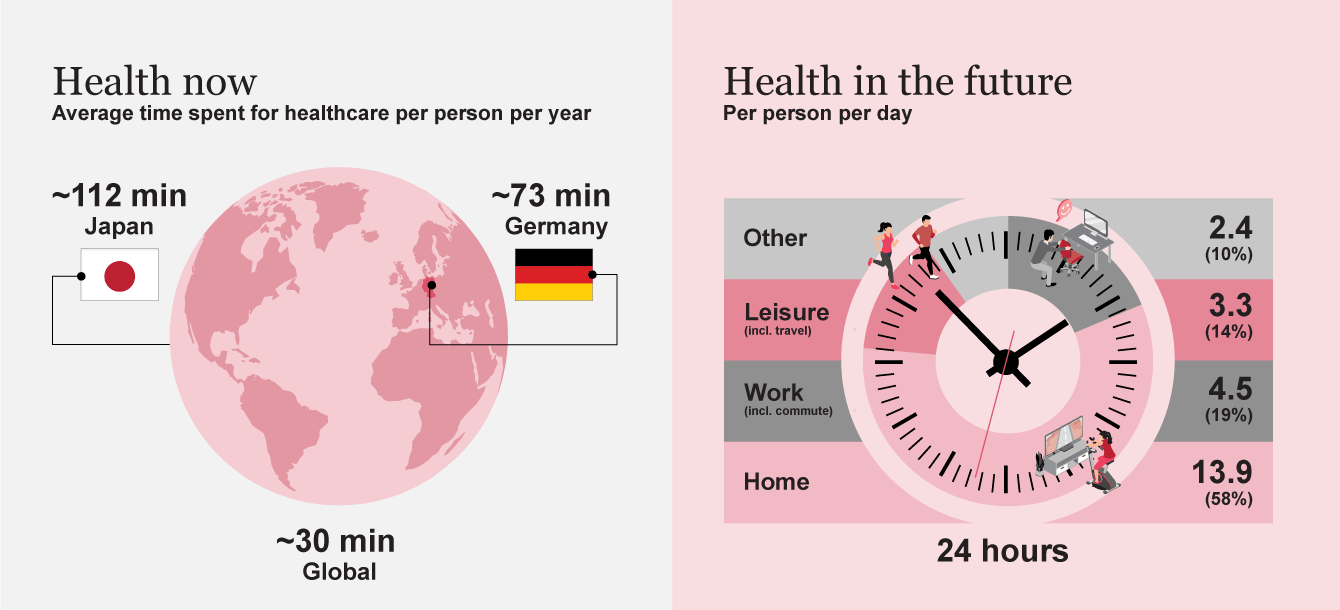
Healthcare still runs on infrequent, isolated data points, while our bodies generate meaningful signals all day long. The average person spends only about 30 minutes a year with a healthcare professional.1 The other 8,760 hours, filled with sleep, stress, movement, and early warning signs, play out at home, at work, and traveling in between – a weak foundation for prevention and early detection.
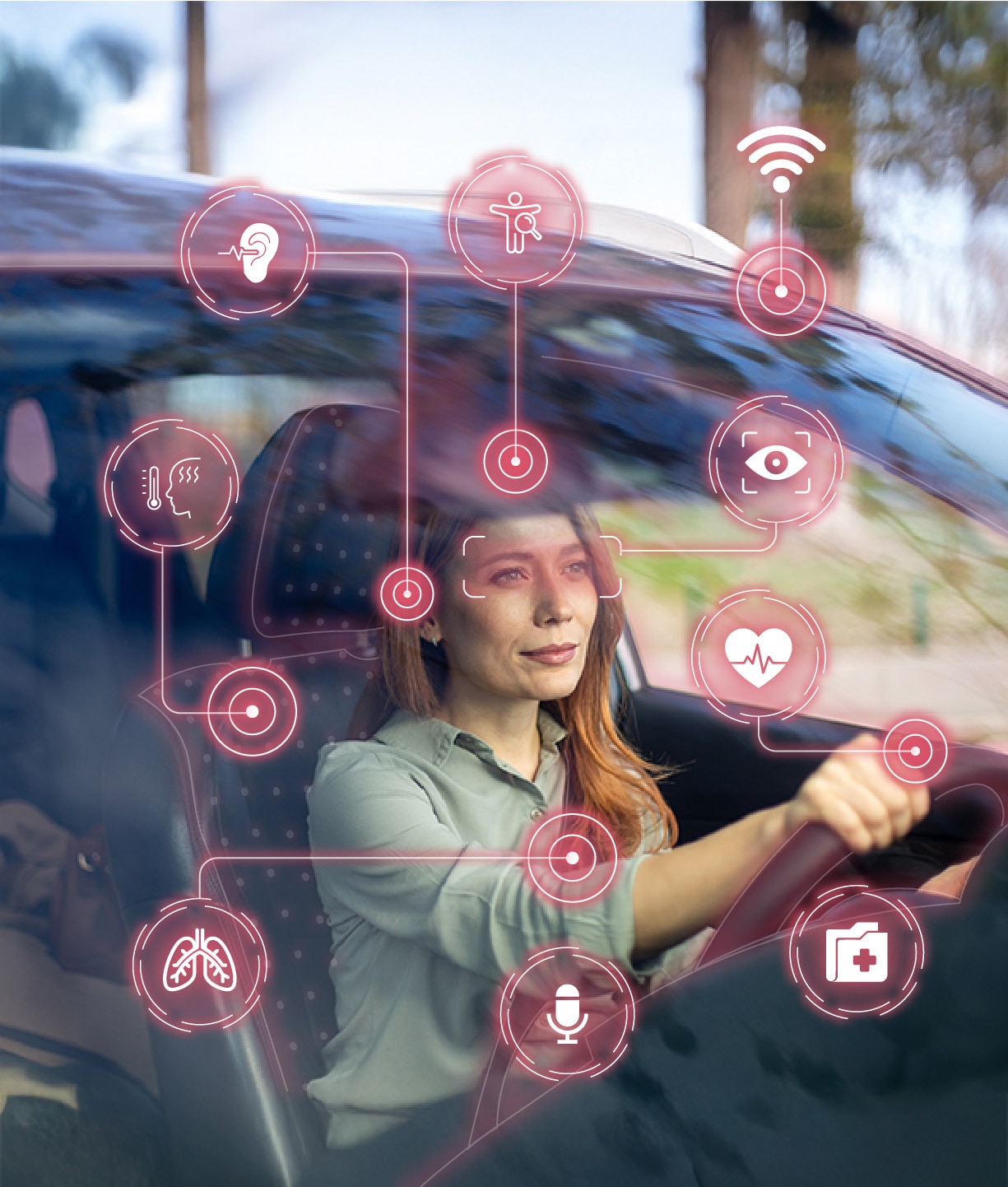
At the same time, the environments where we spend those hours are getting smarter. The home is the anchor of daily life, and the commute and the car fill much of the rest, with a person in Europe spending roughly one hour a day behind the wheel.2 Modern vehicles already act as mobile data platforms, collecting more than 10,000 data points per second. Almost none of that is used for health.
A leading automotive manufacturer and a global pharmaceutical company saw the opportunity, and they also saw the hard questions. Could everyday data reliably signal individuals’ state of health? Who would people trust with sensitive health information?
And how could two quite different industries build a shared business model under strict data-protection rules like GDPR? Supported by our Strategy& pharma life sciences team, they launched a proof of concept to find out, using the car as the first test of a much bigger idea.
1 https://www.oecd.org/en/publications/2023/11/health-at-a-glance-2023_e04f8239.html
2 https://aaafoundation.org/research/american-driving-survey-2020-2021/
Why does this call for business model reinvention?
The opportunity here sits between two industries: To stay competitive and turn uncertainty into advantage, companies increasingly need to realign their business models around essential customer needs, even when that means crossing traditional industry boundaries.
That is the essence of reinvention: fundamentally transforming how a company creates value by uniting its value proposition with its core competencies, processes, and resources. Traditional industry lines are blurring, and new forms of cross-sector collaboration let companies generate more value together than alone. There are many paths to get there, from anything-as-a-service and connected devices to digital products, ecosystems, and value chain shifts. The health car is a clear example of the last one: automotive, healthcare, and technology converging around the customer.
Reinventing the future of health
In the age of AI, many organizations see an opportunity not just for transformation, but for reinvention. Healthcare is no different. Changing the paradigm requires an entirely new ecosystem: earlier intervention, faster and more personalized drug development, more connected physicians, and informed patients who exert more control over their own health.
This ecosystem depends on partnerships across large networks of stakeholders, reaching not just hospitals, clinics, and doctors' offices, but all the places that touch the healthcare system. Nutrition, exercise, transportation, care delivery, technologists, clinicians, and caregivers come together in ways that keep people healthier longer and let the system intervene faster and at lower cost. Care centers on patients, not on provider networks and fee-for-service structures.

"96% of executives agree the Future of Health is people-driven, preventative, personalized, digital, and integrated into daily life. This project was built to deliver exactly that, using an environment where people already spend hundreds of hours each year."
Dr. Thomas Solbach
PwC Global Advisory Pharma and Life Sciences Sector Leader, PwC Global Client Partner, and Strategy& Europe Pharma and Life Sciences Practice Leader

Solution
What did the reinvention project look like?
The project defined an open platform for health solutions in the car and beyond. The vehicle becomes a continuous, controlled environment for longitudinal health monitoring, something no clinic visit can match. Strategy& ran the work as a staged journey, guided by one principle: pilot small, expand quickly, onboard others.
Phase 1: Exploring the vision
The first workshop aligned the partners on a shared vision of health as a 24/7 companion and surfaced first ideas, anchored in our Future of Health study, which describes a future that is people-driven, preventative, personalized, digital, and integrated into daily life. That set the ambition for everything that followed.
Phase 2: Building the use and business case
Next, our team helped the partners define concrete use cases, draft business models, and prepare a senior management pitch. The team used persona thinking, from a family commuter to a professional driver to a risk patient, and prioritized ideas across three dimensions: desirability, feasibility, and viability.
The team explored several medical use cases and applied dementia as a lead sample case, because signs like fading route memory and changes in speech can appear passively in daily driving and in-car dialogue over time. That made it an honest test of whether everyday data correlates with health status. To make it tangible, we mapped which existing and near-term sensors could capture meaningful signals.
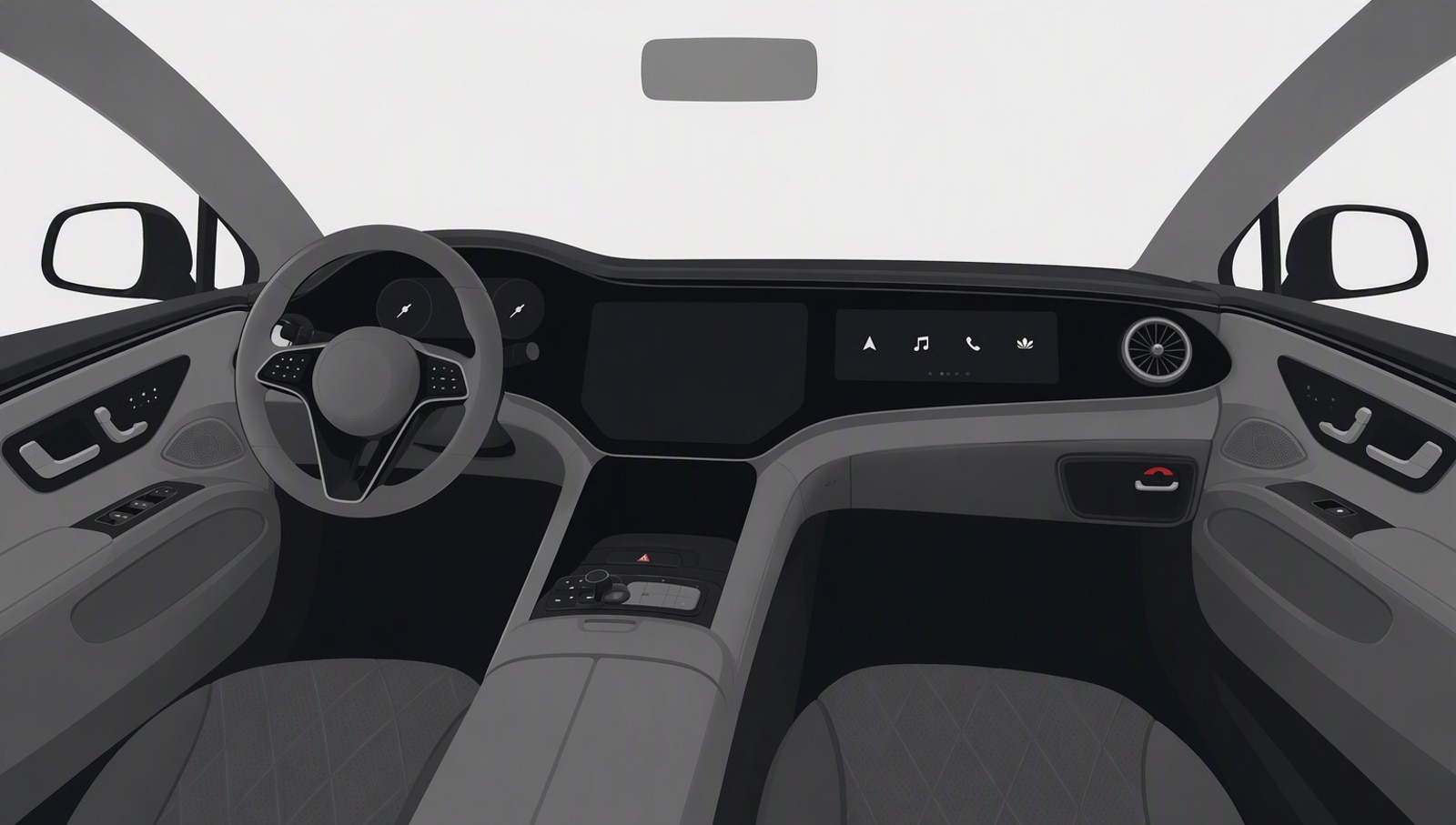
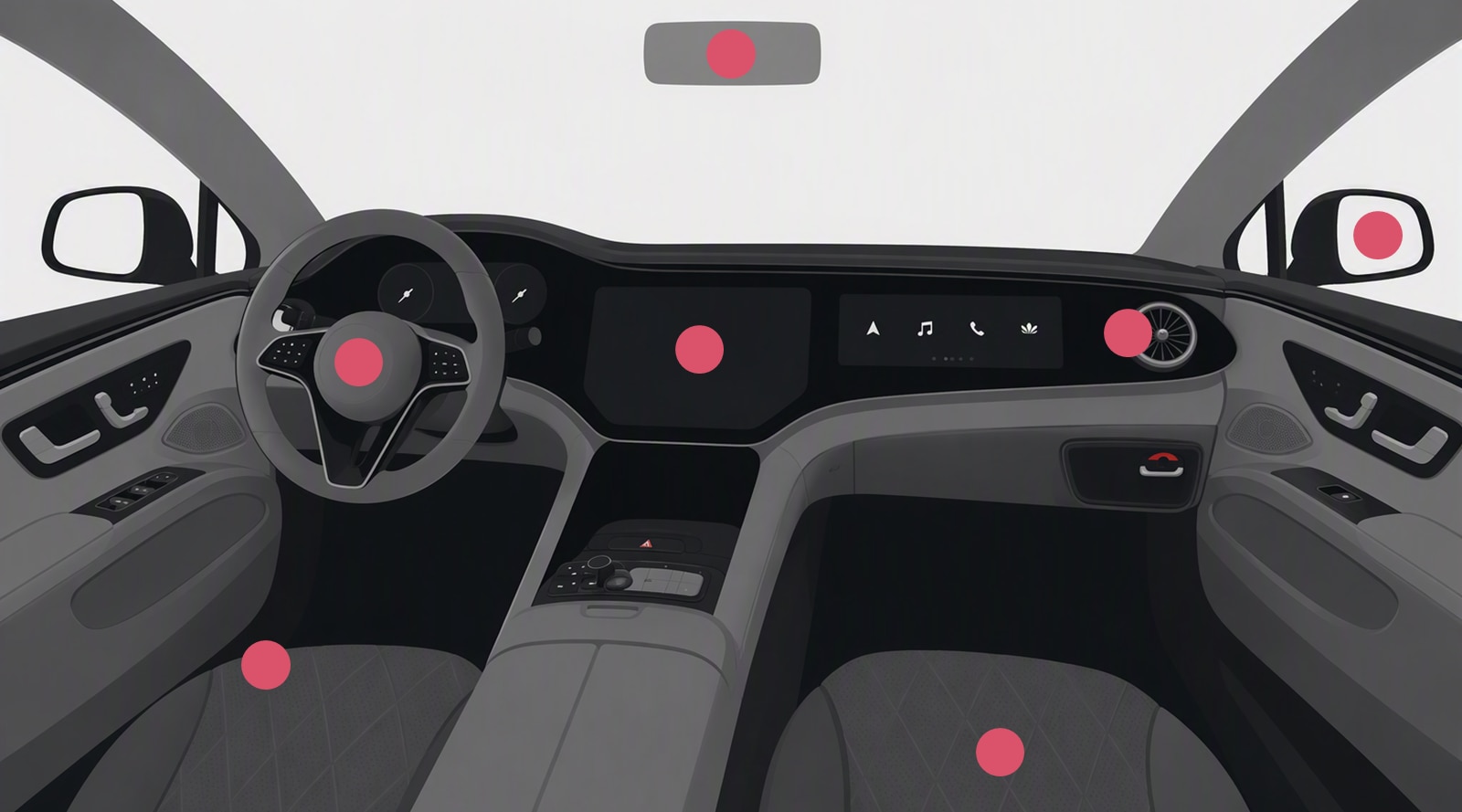
This illustration was created with the assistance of generative AI.

Results
Project achievements
The engagement produced a validated concept, a prioritized set of use cases, and a business model ready to test with a payer. It moved the partners from an open-ended idea to a concrete, fundable proof-of-concept plan, with a shared revenue model across the ecosystem.
The estimated market opportunity Strategy& quantified is significant3:
- The Future of Health’s potential: A projected USD 690 billion annual addressable market for prevention and personalization across the US and Europe
- Strong consumer demand: 64% of drivers are open to health-related assistance systems, rising to 78% among 18-to-34-year-olds
- A real willingness to pay: about 75% of those open to the technology would pay a premium, for 18-34-year-olds the share is 79%. Among active users of health smart devices, acceptance reaches 77%
- Room to scale responsibly: 71% support mandatory use for defined risk groups once the technology matures, while only about 10% reject the systems outrigh
3 https://www.pwc.com/gx/en/issues/value-in-motion.html
Can you imagine using health-related assistance systems in the vehicle?
Would you be willing to pay a premium for a vehicle with "Healthy Mobility"?
The strategic outcomes matter just as much. Payers gain earlier intervention and lower long-term costs. Pharmaceutical companies gain real-world evidence and better monitoring of drug effectiveness. The automotive manufacturer gains product differentiation and loyalty using sensors it already has. And drivers gain safer journeys and more control over their own health.
This case shows the future of health will be built where automotive, healthcare, and technology converge, in the everyday spaces where people actually live.
Conclusion
Reinvention in healthcare will not come from a single new drug or device. It will come from connecting this sector with industries that it rarely engages with, putting the patient at the center. The car, a place where people already spend hundreds of hours a year, is one of the clearest examples of an untapped health touchpoint hiding in plain sight. And this is only one setting: to see how health is moving into the home, read our related report.
Whether you are at the start of your transformation or already on the road to reinvention, the approach outlined here is practical: start with one testable use case, design for trust from day one, and build a business model where every partner wins. With our expertise, network and full-service portfolio, we help you stay on course in tomorrow's dynamic environment.