The future of public defense organizations
Increasing defense outputs and building credible deterrence
Dr. Hans-Jörg Kutschera, Laura Wood, Steve Kershaw, and Mark Ross
A paradigm shift is transforming the defense landscape
Public defense organizations today find themselves in a very different world, far more intricate than it was in the late 20th and early 21st centuries. This evolving landscape stretches beyond the traditional defense industry, casting a wider net across numerous domains. Adding to this complexity, nations face ever-changing threats that require daily vigilance and action. The fusion of a transformed ecosystem and these emerging threats has propelled them into an entirely new era.
To rise to these challenges, public defense organizations need to adapt swiftly, enhancing their ability to deter and counter both current and future threats. This transformation calls for a fresh look at how national defense bodies are organized within governments and how they collaborate with society and industry. Our study aims to pave the way for a new operating model in defense organizations, tackling both familiar and novel challenges. We propose eight targeted service offerings designed to boost skills and capabilities.
The new defense era
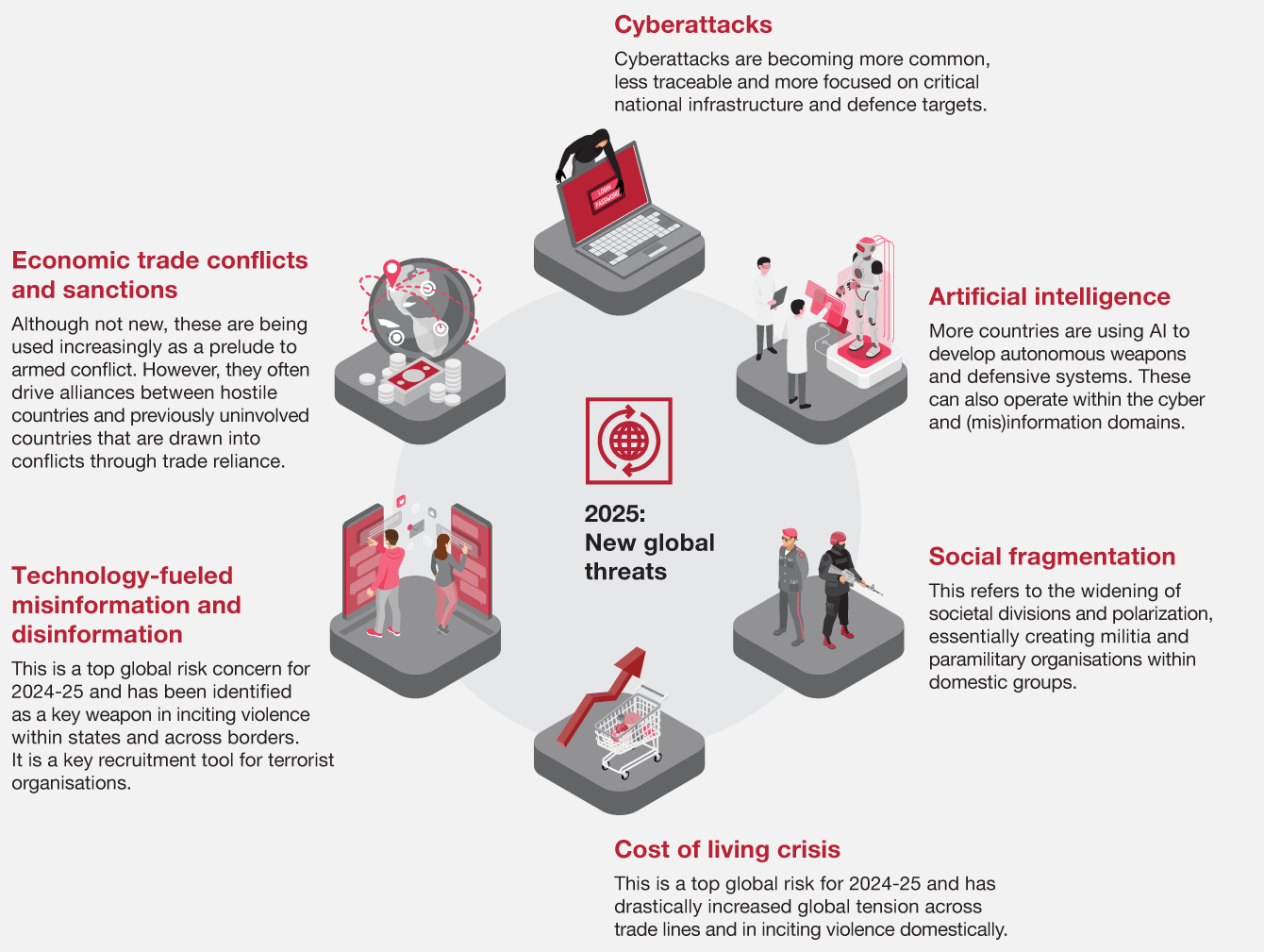
2025: New global threats
These global threats mean that defense is entering a new era where several key facets of the defense environment are changing and combining to create several significant challenges for defense organizations:
- Shifting geopolitical dynamics: The global stage now hosts three main groups: "liberal democracies" aiming to uphold the Western rules-based order, "autocracies" seeking an alternative world order, and the "Global South“ which is not strongly aligned with the first two groups’ nations.
- Democracy under pressure: Liberal democracies face tough hurdles. Organizations like Freedom House suggest we might have hit "peak democracy," with economic strains, migration, rising nationalism, and aging populations creating a challenging environment.
- Evolving military threats: Warfare today blends traditional elements like force size, inventory, and alliances with modern innovations. Rapid capability development, data and cloud exploitation, private sector partnerships, multi-domain operations, and the use of autonomous vehicles and drones are now crucial.
- Technological edge at risk: Maintaining technological dominance requires military organizations to adopt and integrate cutting-edge innovations rather than solely developing them internally.
- Moving away from wars of choice: To enhance resilience and tackle heightened threats, practices involving contractors and supply chains need strategic adjustments.
Crafting tomorrow’s defense blueprint
To tackle both current and emerging threats effectively, public defense organizations need a new operating model. This model must ensure that military forces can be efficiently prepared and deployed, adapting to operational demands and leveraging new technologies. The size of these defense organizations varies widely — from small self-defense units to large, globally active forces. However, all defense organizations share four common outcomes which their operating model and capabilities need to deliver:
Elevating capabilities in a dynamic threat landscape through eight service offerings
In light of an ever-evolving threat environment, defense organizations need to adopt innovative approaches to develop essential future competencies. By pursuing eight targeted service offerings, these organizations can strategically acquire the skills and capabilities needed to meet their unique demands:



- Focuses on analyzing and refining spending patterns to ensure transparent, compliant, and optimal use of limited resources
- Aims to identify cost-saving opportunities and reallocate funds to crucial priority areas
- Allocates funding in a manner that serves defense needs

- Involves enhancing procurement processes to allow acquisition of best quality products/services
- Focuses on streamlining and speeding up procurement workflows, adopting advanced technology, establishing program management and fostering strong supplier partnerships
- Includes ability to supplement defense workforce with supporting capacities

- Emphasizes the transition to secure cloud computing solutions to enhance flexibility, scalability, and security
- Ensures strategic cloud migration with robust security measures to protect sensitive data and operations
- Includes comprehensive digitalization of all aspects of defense organization operations

- Aims to establish an automated, scalable, and efficient software development environment
- Allows for leveraging of software engineering practices through reliable and secure delivery pipelines
- Fosters culture of software innovation and integration across organization

- Ensures that supply chain is robust and agile
- Allows for adaptation to changing demands and disruptions
- Focuses on optimizing logistics, improving supply chain visibility, and integrating advanced technologies and automation

- Aims to build highly skilled, adaptable, motivated defense workforce prepared to lead organizational transformation
- Involves talent management, retention measures, continuous training, and development
- Fosters culture of excellence and innovation across the organization
Building a secure and stable future together
A paradigm shift is reshaping the defense ecosystem. Public defense organizations need to rapidly change and adapt in the key areas outlined above to deter and defeat future threats. There is no simple or easy fix but, when looked at globally, there are examples of good practice in all these areas that defense organizations can draw upon and build new competencies and capabilities as the basis for their target operating model.
Georg Reichel and Svenja Kirsch have co-authored this report.