Future of Food 2.0
Capturing growth in a transforming global food ecosystem
Harald Dutzler and Andreas Späne
Key findings
- Healthy eating, shifting consumer expectations, and environmental change are the top drivers - just ahead of AI and technology - shaping the food ecosystem over the next decade identified in interviews with 30 senior executives from leading food and agricultural companies worldwide
- We identified nine high-growth areas with a projected market size of $3.1 trillion by 2035, growing nearly 4x faster than the estimated $9.9 trillion value of the entire food ecosystem in 2035
- The largest growth area is health and nutrition at $800 billion, with the potential to reshape ingredients and drive more sustainable, resource-efficient production
- Lowering financial and operational risk for farmers is essential to drive adoption and realize the $400 billion opportunity in the 'How we grow' area, while advancements in 'How we produce' could yield a $670 billion market size and also ease land use and supply chain pressures
- Interviewed senior executives stressed that scaling innovations beyond core areas demands decisive long‑term choices on where to play, patient capital to sustain new business models, and collaboration across the ecosystem to share risk and close capability gaps
1 Introduction
The reinvention imperative for the future of the food ecosystem
The global food system is at a turning point. Climate volatility, geopolitical shocks, and resource constraints are disrupting production and supply chains while demand continues to rise. To feed more than 9 billion people by mid-century, calorie production must grow by over 50% from 2010 levels. At the same time, climate change and land degradation erase about 100 million hectares of productive land each year, even as roughly 70% of people live in urban areas. Meeting future demand will require not only higher yields but also land restoration and new production methods to sustain generations to come.
However, these pressures also create opportunities. In our conversations with 30 senior executives from leading food and agricultural companies worldwide, one message stands out: those who recognize and act on these dynamics early will drive growth and build a more resilient food ecosystem.
The challenge is to strengthen links across the food system so farmer pressures and growth opportunities for consumer brands reinforce each other. This study maps and quantifies the main emerging growth areas across the entire food ecosystem – from agricultural inputs to waste recycling – for the next decade.
2 Key growth areas
Mapping the food ecosystem’s emerging growth areas
To identify the biggest opportunities across the food ecosystem over the next decade, we mapped the most dynamic growth areas where value is shifting fastest. We identified nine growth areas, grouped into three key clusters. Using a consistent sizing framework, we projected revenues for 2025 and 2035 to show where growth is likely to materialize:
How we grow − $150 billion (2025) - $400 billion (2035)
Next-gen agricultural inputs

Connected growing systems
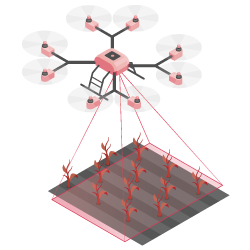
Agri infrastructure
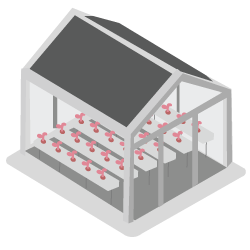
Growth areas will scale only if they solve farmers’ day-to-day challenges: better growing conditions, lower input costs, and higher efficiency. In interviews with cooperatives and farmers’ associations, five levers emerged to accelerate adoption - ranging from financial incentives to stronger demand for sustainably grown products. The effectiveness of these levers depends on local policy, farming practices, and regulatory context.
How we produce − $290 billion (2025) - $680 billion (2035)
Advanced food processing
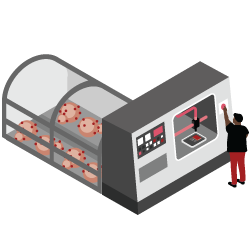
Alternative ingredients and proteins
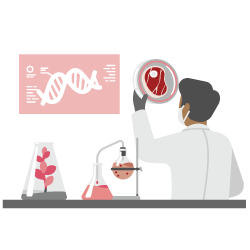
Sustainable packaging

Ingredient substitution is rising as companies counter price volatility and weather risks. Cocoa and coffee are prominent examples. Price swings push substitutes (e.g., carob) or reformulations that use less cocoa and more sugar, which can affect nutrition. Adapting requires new sourcing strategies, more suppliers, and potential changes to processing lines and equipment to handle different ingredients and pre-processing needs.
How we consume − $1,060 billion (2025) - $2,060 billion (2035)
Health and nutrition

Convenience
Shopper experience

Growing markets are highly diverse in consumer preferences, regulations, infrastructure, and channels. While regions like China, India, and parts of Africa are strategically important, many firms lack playbooks to win there. Success depends on deep localization across the value chain – regional sourcing and pricing, locally tailored products and manufacturing footprints, and go-to-market models – while navigating infrastructure gaps, policy uncertainty, and evolving geopolitics.
3 Strategic actions
How food companies can adapt for the next decade
With growth areas defined, the question is how to capture them. All 30 executives we interviewed say unlocking the next generation of growth requires a new approach to innovation and reinvention. Four themes emerged:
- Innovation must blend capabilities across industries, not just push existing products into new markets or make small tweaks
- Growth opportunities are hard to unlock when business cases are unclear, internal skills are limited, and regulatory environments are challenging
- Access missing capabilities by collaborating or acquiring, rather than building everything in-house
- Success depends on strong leadership, deep ecosystem connections, and enterprise-wide technology that sustains momentum through early-stage uncertainty
4 Conclusion
The 3Cs of food reinvention
Value is shifting, with about $3.1 trillion moving into new growth areas over the next decade. Food companies must decide where to compete and how to win. In a volatile, uncertain environment, scenario planning is essential: map plausible futures and place deliberate bets today, because inaction or incremental changes leave major growth opportunities on the table. Those who focus on a targeted set of growth areas, build the right partnerships, and scale proven solutions will be best positioned to capture this value and help rebalance a strained food ecosystem.
To stay competitive in a shifting food system, companies must reinvent how they create, connect, and capture value:
Identify future growth areas where you will compete – shaped by shifting consumer demands, disruptive technologies, and system-wide sustainability pressures.

Build the strategic partnerships, shared data flows, and cross-value-chain collaboration needed to deliver new value.

Design business models and go-to-market approaches that turn innovation and collaboration into profitable, scalable growth.

Jakob von Baeyer, Shokoofeh Manesh, Julia Rödel, and Pauline Holt have also contributed to this report.
Future of Food 2.0

Webcast - Future of Food 2.0
In our webcast on 13 April 2026, we unpacked the study’s findings and explored what they mean for companies navigating this change. Industry leaders Dries Roekaerts of Barry Callebaut Group, Florian Mayer of RWA, and Nadia Yuzhannikova of Ahold Delhaize, shared their perspectives on how businesses can respond to disruption, scale innovation and position themselves for future growth.
Register now to access the recording