Agile defense procurement
Mechanisms to ensure wartime readiness in times of peace
Albert Zimmermann
Executive summary
- European nations must develop agile procurement mechanisms during peacetime as procurement organizations are a fundamental pillar of effective deterrence and national security
- Success depends on the expansion of the current national procurement models by leveraging multinational cooperation for complex rearmament projects and prepare mission command procurement to enable rapid wartime decision-making through decentralized structures
- Implementation requires systematic alignment across regulatory modernization, strategic budget and contract adaptation, and effective portfolio and supplier management
From peace to power: The agile procurement imperative
Today's evolving geopolitical landscape demands decisive deterrence, while dynamic threats require unprecedented agility in military operations. As armed forces must establish robust peacetime mechanisms to ensure wartime readiness, procurement organizations have emerged as fundamental pillars of effective deterrence.
Two critical mechanisms have emerged to complement classical national defence procurement strategies: multinational cooperation for complex rearmament projects and mission command procurement that enables rapid wartime decision-making.
Several nations are already modernizing their procurement strategies to address contemporary challenges, creating a strategic imperative for Europe to develop these same mechanisms during peacetime. This study examines key trends in defense procurement and provides strategic recommendations for aligning financial, legal, and organizational foundations – ultimately securing Europe's sovereignty through credible deterrence and force multiplication.
Effective procurement mechanisms to enhance defence readiness
Multinational cooperation and mission command procurement represent two critical mechanisms essential for ensuring wartime readiness in today's security environment:
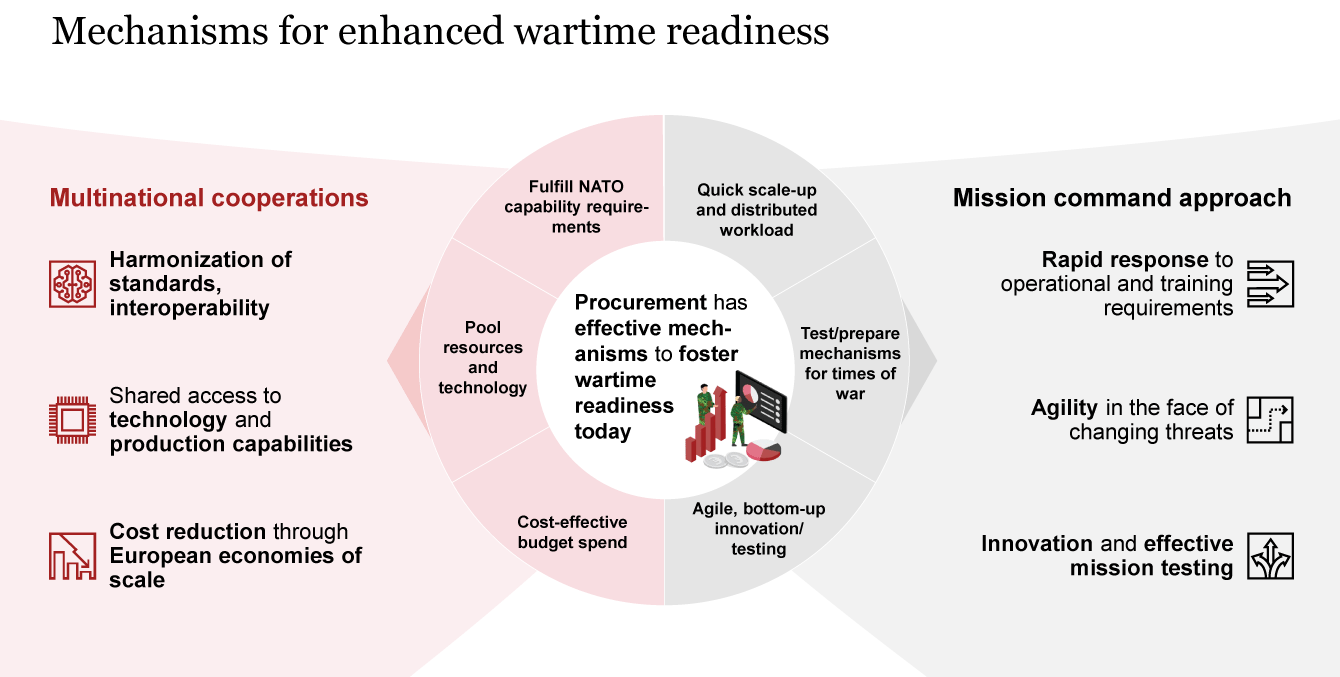
Mechanisms for enhanced wartime readiness
Multinational partnerships have become indispensable for managing complex rearmament projects that exceed individual nations' capabilities, while mission command reforms enable the rapid decision-making processes crucial for effective wartime operations. The surge in demand for multinational defense projects and market-oriented procurement approaches clearly demonstrates the growing strategic importance of both mechanisms.
Together, these effective procurement mechanisms create a robust foundation for transforming peacetime preparations into wartime advantages, combining the scale and efficiency of collaborative efforts with the agility and responsiveness of decentralized command structures.
Increasing demand for multinational projects and market-oriented procurement shows the growing importance of both mechanisms:
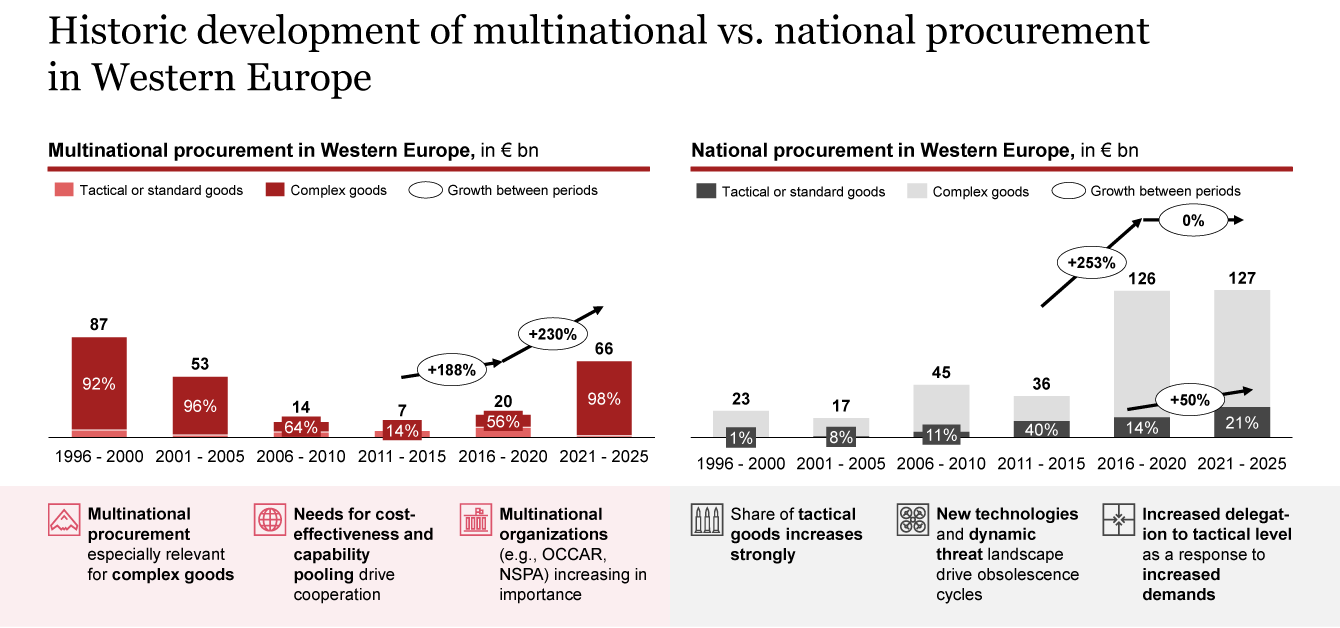
Historic development of multinational vs. national procurement in Western Europe
Transforming defense procurement: The European imperative
While leading warfighting nations are rapidly updating their procurement strategies to meet today's security challenges, Europe faces the critical task of developing these essential mechanisms during peacetime. The evolution of defense procurement demands systematic alignment of legal, financial, and organizational foundations with contemporary security needs. Three fundamental pillars drive this transformation:
Regulatory modernization serves as the essential foundation, enabling increased agility across all procurement models. Strategic adaptation of budget and contract architecture creates the framework for an improved and responsive procurement ecosystem. Finally, effective portfolio and supplier management transforms strategic concepts into operational reality, delivering the agility that modern defense demands.
Success requires coordinated action across all three pillars, creating a procurement system capable of meeting both current needs and future challenges with unprecedented speed and effectiveness.
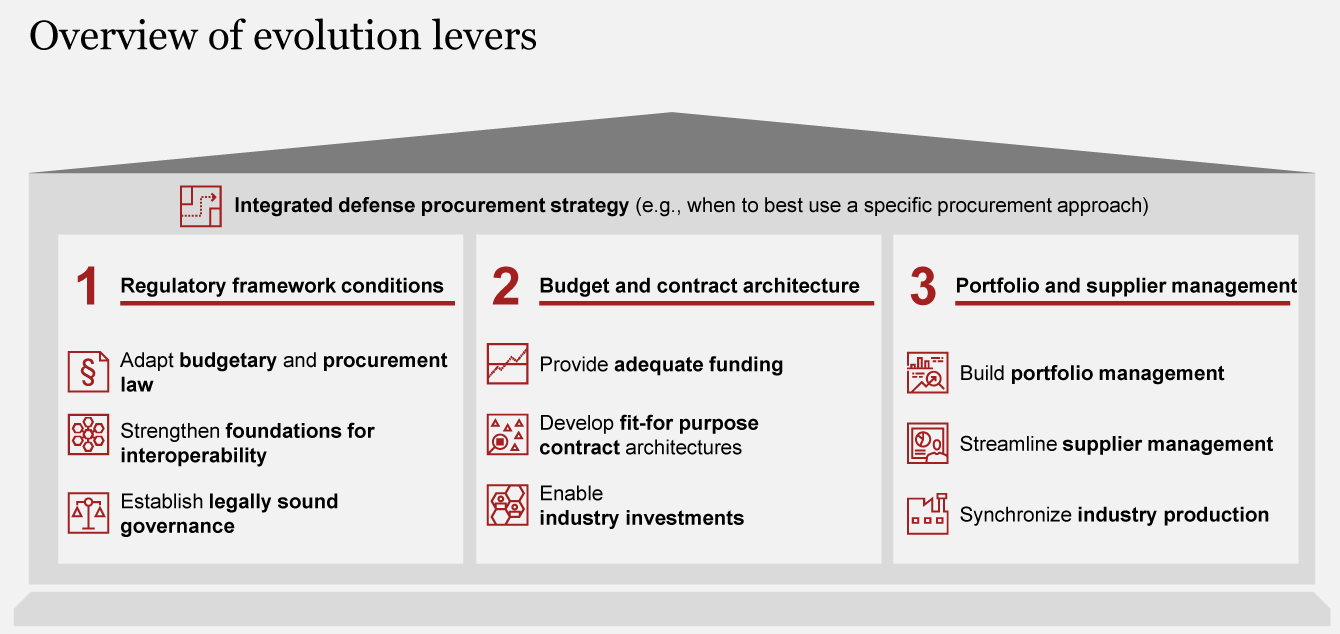
Overview of evolution levers
Felix Ziegler, Moritz Bergdolt and Danica Seeler co-authored this report.