
PharmaCos and Biotechs are confronting two contrasting realities. On the one hand, scientific and technological advancements are breeding innovative therapies. Around ten new modality types, such as CAR T-cell and gene-editing therapies, have entered the market in the last decade. The FDA in the United States has now approved more than 120 such therapies.12 But on the other hand, there has been a clear decline in returns from research and development (R&D), a consequence of the increased cost, time, and complexity in bringing new therapies to market.
How then can R&D be made more efficient?
Drivers behind R&D return
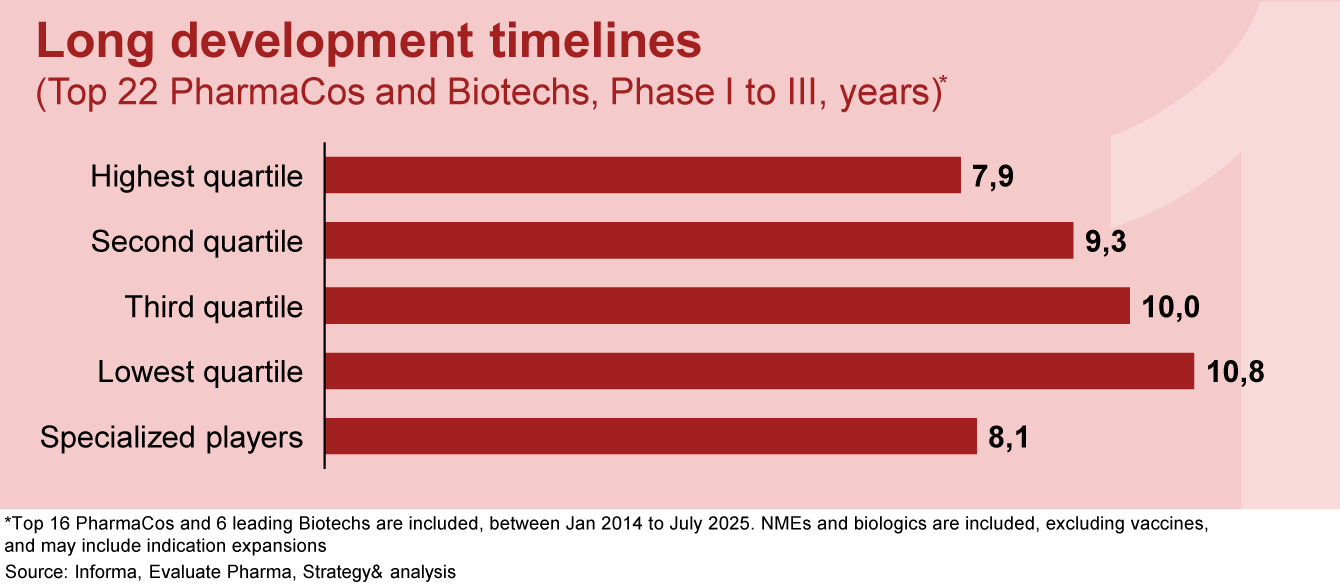
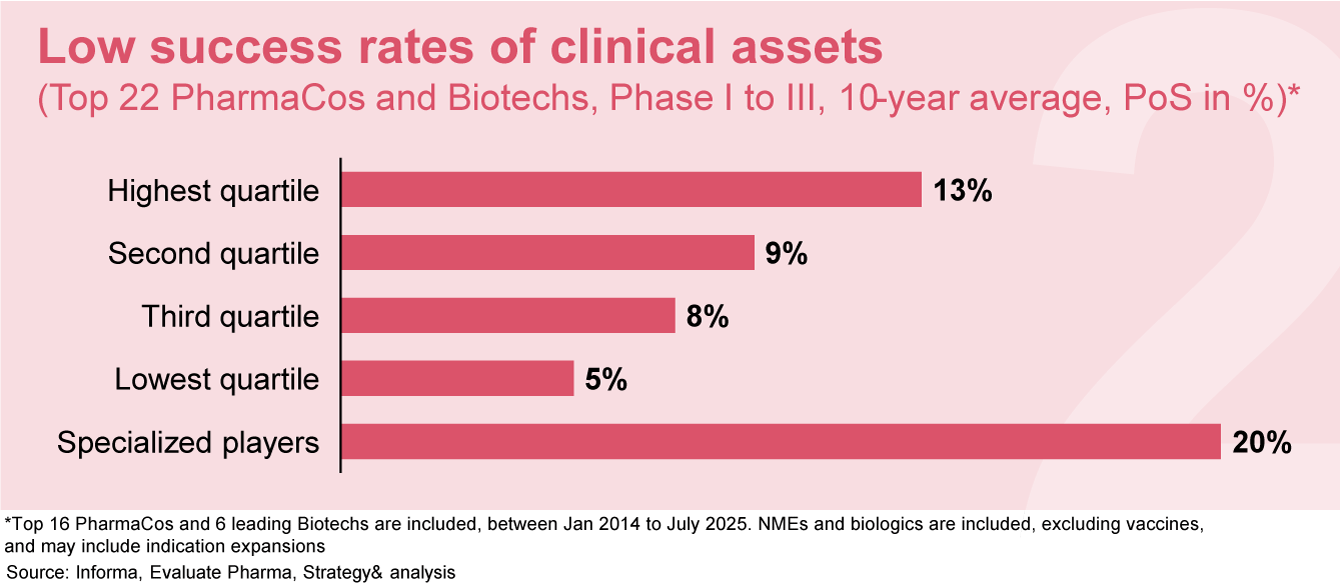
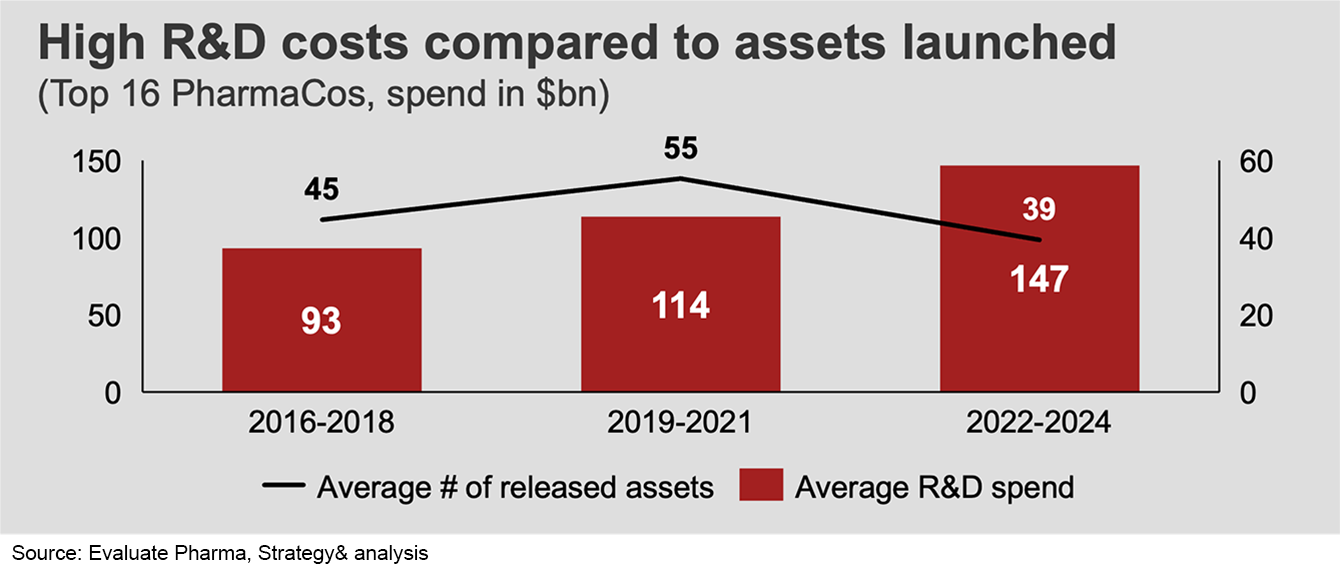
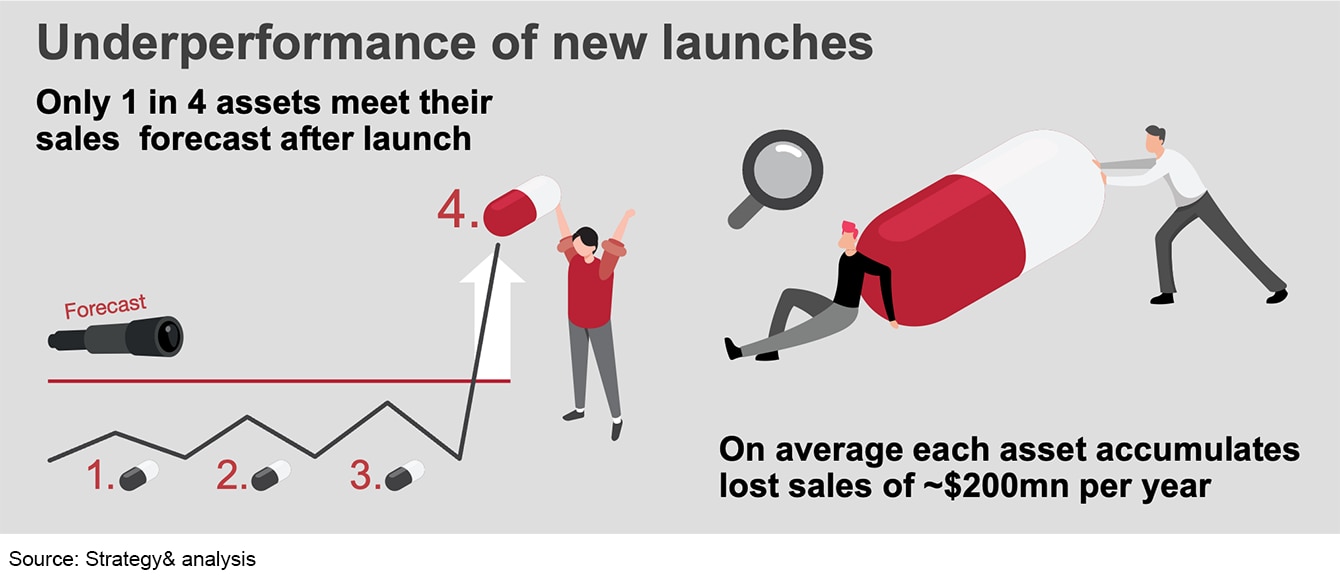
An analysis of leading PharmaCos and established Biotechs3 demonstrates that R&D productivity within the overall sector has not significantly improved (see Figures 1 to 4). Moreover, this underperformance has come despite rising AI investment, numerous transformation initiatives, and more efficient regulation. In contrast, only specialized players, such as Regeneron and Vertex, have been able to buck this trend (see Figures 1 and 2).4
To understand the drivers behind current R&D returns, we assessed four key factors:
-
R&D timelines:
Drug development still averages from eight to eleven years, suggesting that predictive tools and acceleration pathways have not bolstered efficiency (although there are some exceptions, as demonstrated by Amgen's Lumakras5 and others). Established Biotechs with narrower TA focuses appear to perform better than the average company, possibly due to their more focused therapeutic pipelines.
-
Clinical trial success rates: The probability of success (PoS) from Phase I to III remains low for most players, only averaging between 5% and 13% even for leading PharmaCos. Specialized players are enjoying the most success, probably due to their more efficient mechanisms for predicting candidate success and improving trial performance.
-
Cost of R&D: Recent trends reveal a significant rise in R&D spending relative to the number of assets launched. However, despite increased investment, there have been fewer asset releases over the same period. Bringing a single asset to market has thus become increasingly expensive. Firms are struggling to contain the development costs that are essential for sustainable innovation.
-
Launch success:
Historically, only one in four new assets has met post-launch sales forecasts, resulting in an estimated $200 million in lost sales per year.6 This disappointing performance can be attributed to various challenges involving regulation, reimbursement, and adoption.
To reverse these trends, PharmaCos and Biotechs must reassess how they approach, manage, and execute R&D. First and foremost, they need to understand how R&D performs today and what exactly is contributing to sub-optimal returns.
Strategic framework for future-proof asset development
To address the persistent evident inefficiencies in asset development, we propose a structured framework across the three organizational layers, based on our substantial experience in the transformation of leading PharmaCos and Biotechs.
We have identified elements in each layer that can drive smarter, faster, and more commercially focused development decisions across the pipeline. When working in unison, three well-functioning layers can create a system that is not only operationally efficient, but also strategically coherent.
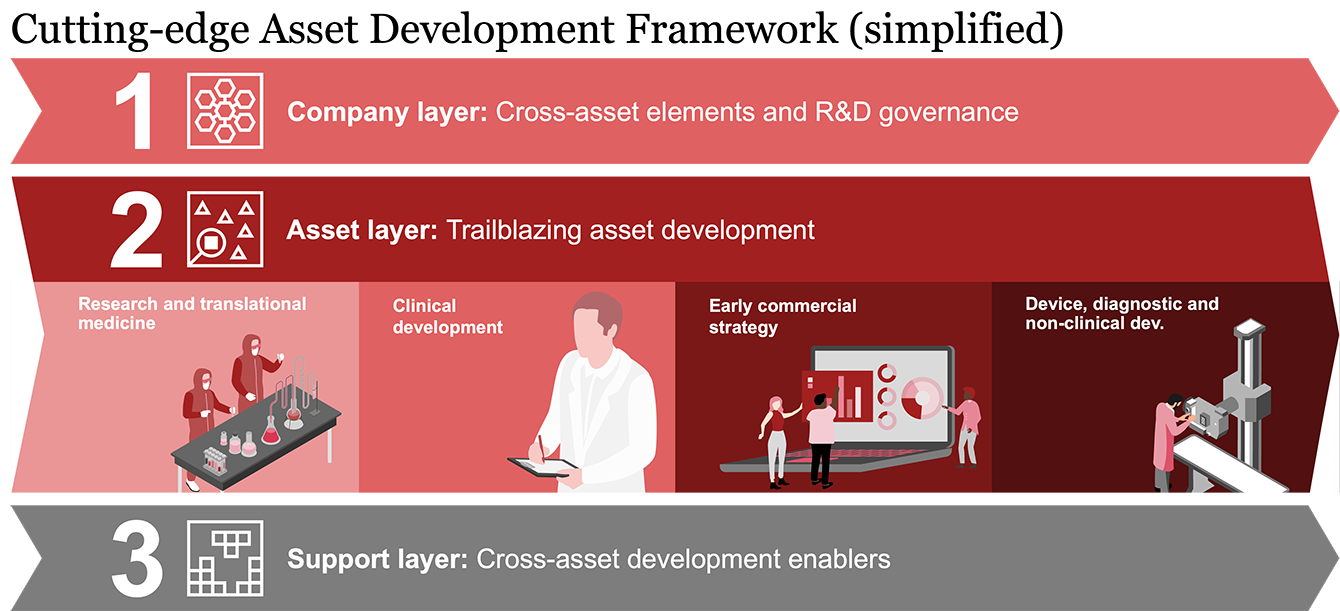
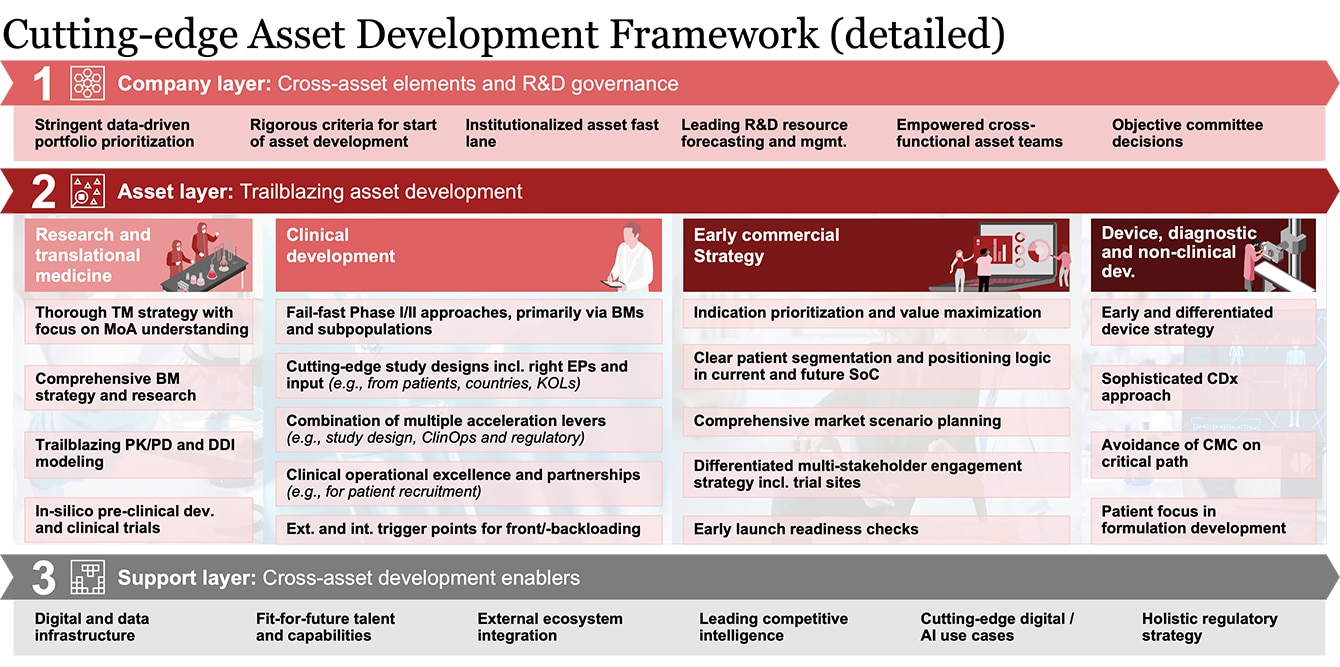
For the company layer, we focus on the cross-asset elements and R&D governance that establish a future-proof structure for the development organization. In the asset layer, we define four elements that create trailblazing asset development, including Clinical Development and early Commercial Strategy. For optimal development enablement, facilitating elements are collected in the support layer.
Cross-asset elements and R&D governance
Cross-asset elements and R&D governance
Six elements can address the cross-asset root causes of underperforming R&D within the company layer. Despite repeated efforts, most PharmaCos do not possess a thorough, data-driven portfolio prioritization methodology. Cutting-edge approaches that use three to four tiers of prioritization can focus asset development to ensure sufficient funds are allocated to the highest-priority assets.
Since questionable assets are often selected for clinical development, rigorous criteria at the start of this process are crucial. The criteria employed at the outset need to be aligned with overall R&D strategies. A leading PharmaCo has pioneered such an approach with their 5R framework, which allowed them to increase R&D success rates from ~4% to ~19%.11 Other PharmaCos have developed similar approaches, such as a leading global PharmaCo which performs early-stage filtering and ongoing benefit–risk–value assessments, enabling active termination of low-value assets.
To accelerate the development of the highest-priority assets, institutionalized asset fast lanes have proven to be a game-changing element, motivating people from across the company to support the development of those assets. Bristol Myers Squibb has successfully introduced such a fast lane (e.g., high company attention for an asset, faster committee access, bootcamps, more trial sites, A-teams), resulting in accelerated development timelines
R&D resource forecasting and management still represent a very undervalued element. Indeed, most PharmaCos still fall short in this area. Without this element, PharmaCos cannot prioritize assets. Nor can they allocate optimal resources to asset teams, a particular challenge during a capacity crunch. Leading PharmaCos have been able to implement cutting-edge approaches to address resource forecasting and management.
Despite the transition to asset team structures at most PharmaCos, the majority lack empowered asset teams with clear R&D governance as guardrails, while relevant functions have not been effectively integrated. Thus, the refinement of the asset team setup represents an element that most companies need to address. A leading PharmaCo has recently taken a major step toward asset team independence with its dynamic shared ownership approach.
Committee decisions on progressing or halting assets are crucial. In our view, most PharmaCos have not fully grasped the importance of objective and efficient decision committees. Moreover, these committees, concentrating on key decisions and milestones, play a vital role in the interplay with empowered asset teams.
Trailblazing asset development
Trailblazing asset development
While the company-wide elements are certainly important, asset-specific elements are particularly impactful. We group the elements in this layer into four key blocks as detailed below: research and translational medicine, clinical development, early commercial strategy and devices, diagnostics, and non-clinical development.
Over recent years, we have observed that PharmaCos tend to excel only in one or two of the blocks. Moreover, the application of these elements relies excessively on the expertise of the asset team without any structured frameworks to guide them (when it comes to market scenario planning, for example). PharmaCos should implement those elements that have the greatest potential for improvement and ensure that they are applied across asset teams through clear deliverables, and effective training and governance.
A. Research and translational medicine
PharmaCos do not tend to view Translational Medicine as a differentiator for asset development. However, if implemented in a structured way, the following elements can have a substantial impact on development success; the early definition of a thorough strategy for translational medicine and science, the design of a solid biomarker strategy with an emphasis on BM-enabled proof of concepts (PoCs) and patient stratification, and innovative PK/PD and DDI modeling. In recent years, in silico approaches for preclinical trials have been proven to make Translational Medicine more efficient. As an example, a leading PharmaCo leveraged in silico translational PK/PD modeling to significantly improve proof of mechanism (PoM) success rates.12
B. Clinical development
Although most PharmaCos have recently invested substantial effort into clinical development, we would argue that several key elements have not been fully leveraged. To speed up the time to PoC and minimize resources, fail-fast approaches for Phases 1 and 2 could still be more widely applied (e.g., via biomarker read-outs). A structured discussion should take place for each asset to establish whether a fail-fast approach is appropriate.
Other elements which could be improved include study designs (such as platform and adaptive trials) and identifying the right endpoints. PharmaCos should establish a comprehensive clinical library to facilitate these designs in each asset team.
Despite recent endeavors, we have rarely seen impressive acceleration in asset development. We would strongly endorse a concerted application of acceleration levers for study design, clinical operations, and regulatory approval, as well as instituting trigger points for the front-loading of work packages. For high-priority assets, asset-specific levers must blend with company-wide measures such as increased resourcing and asset fast lanes.
Excellence in clinical operations can also be significantly enhanced. Site initiation can still be improved, and patient recruitment in particular needs innovative thinking to differentiate itself from the competition. We have also seen PharmaCos emphasize the improvement of their service level for trial sites.
C. Early commercial strategy
We still see PharmaCos that do not pay sufficient attention to the design of an Early Commercial Strategy, often resulting in severe underperformance when assets are launched. The clear prioritization of indications has the highest impact on the topline. We would highly recommend applying a structured approach, with relevant comparisons made between indications. PharmaCos should use market scenarios for the launch and feed this scenario analysis back into development plans. Based on these scenarios, they can then conduct profound pricing modeling and optimize launch sequencing.
PharmaCos should thoroughly consider the place of an asset in the current and future SoC (also achieved through market scenarios). Moreover, higher price points are often only possible in stratified patient populations, so companies need to discover the most appropriate patient segmentation.
Multi-stakeholder strategies are becoming more important in shaping the market and preparing for the launch. Depending on the asset, the importance of patients, payers, trial sites, key opinion leaders (KOLs) and other stakeholders does vary. Nevertheless, a comprehensive stakeholder engagement plan should be put in place for each asset. Some PharmaCos are spearheading both innovative patient engagement and strategic trial site engagement.
To guarantee a successful launch, early and ordered readiness checks can help to identify potential gaps and hurdles. These checks are paramount when entering a new indication or even therapeutic area (TA) for the respective asset and should also inform the approach to stakeholder engagement.
D. Devices, diagnostics and non-clinical development
These elements are often critical for asset development and can even act as differentiators. To implement the patient segmentation strategy and utilize BM-enabled readouts, PharmaCos should design a sensible companion diagnostic (CDx) strategy early in the process. To avoid delays with CMC (Chemistry, Manufacturing, and Controls) work packages, prudent front-loading should be deployed. Cutting-edge CMC approaches, including digital and AI use cases, can also be utilized.
A differentiated device strategy has proven to be especially important for liquids. With patient-centricity on the rise, it is becoming ever more important to integrate patient preferences and insights into formulation development.
Cross-asset development enablers
Cross-asset development enablers
The support layer consists of six essential elements which facilitate high-performing R&D organizations: digital infrastructure, fit-for-future talent, ecosystem integration, competitive intelligence, AI use cases, and regulatory strategy.
A robust, interoperable digital and data infrastructure is now indispensable in today’s environment. With such an infrastructure in place, digital and AI applications can be used across the pipeline to support both asset-agnostic and asset-specific development. PharmaCos should ensure that scalable use cases, such as trial site selection, are rolled out broadly, while also incentivizing modality-specific or asset-specific solutions.
Empowering cross-functional asset teams with the right talent and upskilling is a necessity. Leaders should be proactive and oversee proper integration. Competitive intelligence should also be embedded within asset teams, supporting scenario planning and indication prioritization in a strategic way. As healthcare evolves, external partnerships and an ecosystem mindset are growing in importance. This means dedicated teams and new ways of working are necessary.
Regulatory strategy, often seen as a baseline function, can itself act as a differentiator, enabling faster approvals and more successful launches. Taken together, all these supporting enablers form the connective tissue that encourages consistency, continuous learning, and acceleration throughout the asset development process.
While most PharmaCos have already implemented some elements in each layer, most companies lack a comprehensive framework to enhance asset development.10 Moreover, those elements already in place, such as cross-functional asset teams, could often be improved
Outlook for the future of asset development
PharmaCos and Biotechs must now move quickly to reinvigorate their approach to asset development. The framework outlined in this article is not just theory. It reflects what high-performing asset development organizations have started to implement in the real world: clear governance, cross-functional alignment, and smarter execution across the asset lifecycle.
To move forward, firms can take three decisive steps:
- Assess the company layer: The task of improving R&D returns can only start with an objective analysis of current cross-asset elements, identifying structural gaps and opportunities for improvement.
- Activate asset teams: Asset teams can use our framework as a practical blueprint, but their proactive engagement and ownership will be critical for success. For an optimal outcome, we recommend applying this layer across asset teams at the same time, over sequenced implementation asset by asset.
- Strengthen the support layer: Enabling elements, such as digital and talent, must be continually reinforced. To achieve this goal, alignment with functional stakeholders outside R&D is important.
We recommend beginning either on the company layer or the asset layer and then commencing on the second after six to nine months. If a PharmaCo is facing R&D challenges and limited success across the pipeline, the company layer should be the priority. However, when PharmaCos have a couple of extremely promising pipeline assets and asset strategies but are finding it difficult to realize them, the asset layer should come first.
Depending on the gaps that currently exist, both the company and asset layer can involve either focused initiatives or a large-scale R&D transformation. Strengthening enablers can either run in parallel with the above, or after tackling the other two layers.
PharmaCos and Biotechs that evaluate their R&D setup through the lens of these three layers, and then act decisively, can achieve more efficient decision making, successful launches, and stronger R&D returns.
Rahul Khatri co-authored this blog article. The authors also would like to thank Navid Memarnia for his contributions.